

Most organisations think about succession planning when someone resigns, but by then, it’s too late.
Succession planning, talent mapping and managing flight risk are key commercial risk management tools. They are not the responsibility of just an HR team but should be part of the considerations of all leaders. Here’s why they matter and what employers should be doing.
Succession planning is about commercial risk management, not just about ‘replacement’
When a key person leaves unexpectedly, the impact is rarely contained to one role…. you may find that projects stall, clients feel unsettled, teams lose confidence and ultimately pressure lands on already stretched leaders.
Yet many organisations still treat succession planning as something to revisit “next year” or as a reactionary measure.
The reality is that succession planning isn’t about replacing people, it’s a key tool to protect the business.
What is talent mapping and why should leaders care?
Talent mapping gives you visibility of the critical roles that would significantly impact your business if vacant, the individuals with high potential, the roles that are dependent on single points of failure, what emerging leadership capability you have in your organisation, and the skills you don’t currently have in-house.
It allows you to answer a simple but powerful questions: if key people resigned tomorrow, what would we do?
Organisations that map talent regularly tend to make better recruitment decisions, invest more effectively in development, and recruit intentionally. This is because they have visibility of:
Who could step into critical roles
Where your capability gaps are
Who might leave in the next 12–18 months
The hidden cost of a flight risk
High performers will often leave quietly… unfortunately, they don’t always raise issues, they simply move when the right opportunity appears.
If you haven’t identified your key talent and discussed career pathways with them, you’re increasing the likelihood they’ll look elsewhere and replacing high performers is not normally neutral. Recruitment fees, onboarding time, lost productivity and cultural impact all add up.
Recruitment without a succession lens is reactive
Often, recruitment is used to fix immediate problems but, without talent mapping, recruitment decisions may risk duplicating on skills you already have, ignoring future capability needs, and potentially create missed opportunities to promote internally which can cause a real sense of frustration among high-potential employees.
Strategic recruitment starts with understanding:
- What capability do we need 2–3 years from now?
- What can we grow internally?
- Where do we genuinely need to hire?
- What leadership gaps are emerging?
This is about recruitment becoming a genuine tool to support the growth of your business and not just an urgent, in-the-moment decision due to an immediate need.
So, what should employers be doing?
If succession planning feels overwhelming, start practical:
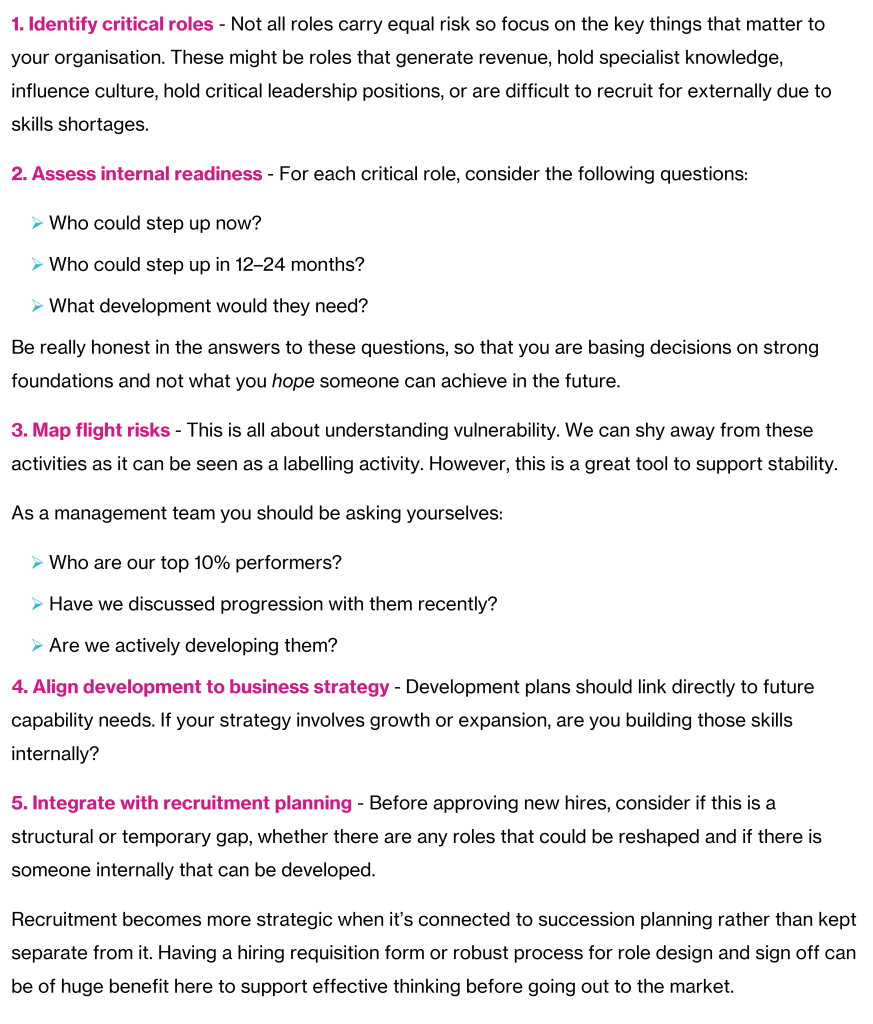
All of these steps should support you in your succession planning, which is ultimately about building a strong foundation that helps mitigate risk, so your business can keep moving forward, whatever changes come your way.
To find out more about how we support organisations with strategic workforce planning, talent mapping and recruitment, visit our website or explore our HR advisory services.
Get in touch today to find out how we can support you and your business.